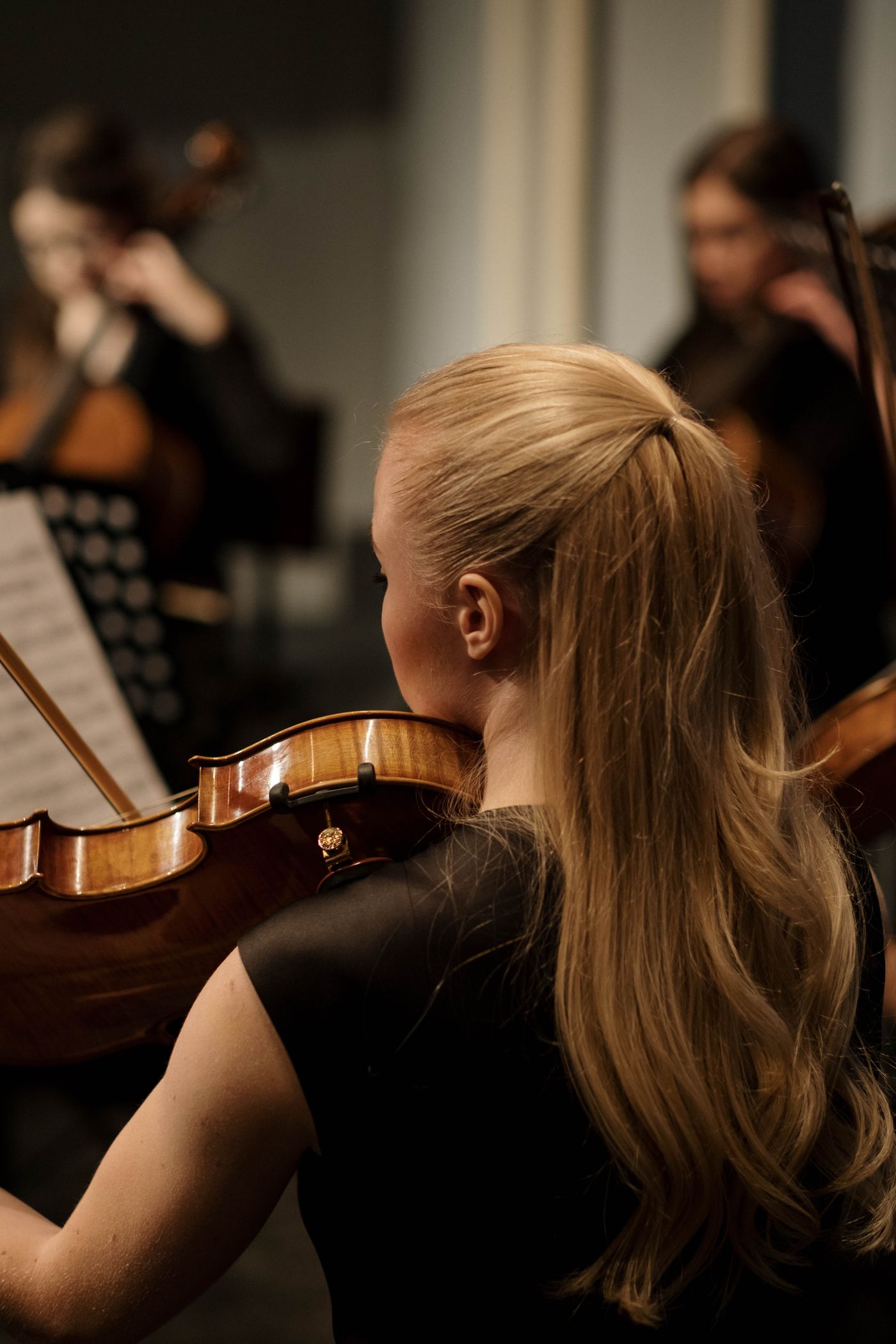
Classical music covers many instrument combinations and ways of shaping a phrase. Start by choosing a solo instrument, chamber group or larger ensemble, then describe how the melody and accompaniment share the musical space. A light quartet, an ornamented keyboard piece and a slow orchestral movement need different instructions. These ten examples explore those choices without quoting an existing work or relying on a composer name. Most are instrumental; the art-song example deliberately includes a voice and a separate original lyric brief.
Starting points in this collection
| Example tempo targets | 60 to 132 BPM |
|---|---|
| Original examples | 10 |
| Before making a recording | Choose the language and vocal or instrumental setting, then review the full brief. Tempo numbers are requests, not measured results. |
Prompts to copy and adapt
These are original directions to try, not recordings or verified performance results. Copy the sound description, then add your own story or lyrics. Use this idea carries the full selected brief into our main composer for review after sign-in.
A solo piano phrase with room to breathe
Romantic-era-inspired solo piano, 64 BPM as a reference. Instrumental only. Let a singing upper melody move over widely spaced broken chords, keeping the lowest notes soft. Allow a small breath before the melody returns rather than forcing every phrase to the same length. Bring the left hand closer to the middle register for one warmer passage, then restore the open spacing. Resolve the final melody note before the last chord decays. No voice, strings or percussion.
Four strings with distinct roles
Classical-era-inspired string quartet, 108 BPM. Instrumental only. Use two violins, viola and cello. The first violin introduces a short detached theme while the viola keeps a light repeated figure and the cello marks the harmonic changes. Let the second violin take one complete phrase as the first violin rests. Keep bow attacks tidy and dynamics moderate. Bring the opening theme back with a quieter viola part, then close with a brief shared cadence. No choir, piano or drums.
An ornamented harpsichord line
Baroque-inspired solo harpsichord, 100 BPM. Instrumental only. Use a nimble upper line over a steady lower pattern, with brief ornaments placed at phrase endings rather than on every note. Let the bass rise through a short sequence while the upper figure keeps its shape. Keep the texture to the keyboard without orchestral doubling. Return to the opening harmony and articulate the final cadence clearly, allowing the harpsichord sound to decay naturally. Exclude voices, percussion and sustained synth layers.
A cello carrying its own harmony
Solo cello, 72 BPM. Instrumental only. Begin with a low resonant note followed by a rising arpeggio that implies the harmony without accompaniment. Alternate short bowed phrases with a few longer sustained notes, keeping the melody within an audible middle register. Let one higher phrase supply the main contrast before returning to the opening low note. Finish with a measured downward line and a quiet resolved note. No piano, orchestral strings, percussion, voice or choir.
A woodwind theme passed around the group
Woodwind quintet, 96 BPM. Instrumental only. Use flute, oboe, clarinet, bassoon and horn. Let the clarinet present a short lyrical theme while bassoon supports it with separated low notes. The oboe then takes the phrase as flute supplies a quiet upper line and horn holds the harmony. Keep the parts lightly scored so each entrance is audible. Close with a compact return of the clarinet theme and a settled ensemble chord. No strings, percussion or voices.
Clarinet above a quiet piano pattern
Clarinet and piano chamber music, 80 BPM. Instrumental only. Give the clarinet a smooth middle-register melody over softly repeated piano chords. Leave room for the clarinet to finish a breath before the piano moves into its own short phrase. Keep the keyboard bass restrained instead of duplicating every clarinet note. A slightly higher clarinet passage can broaden the middle of the piece, then descend to a quiet closing cadence. No strings, drum kit or sung part.
A slow chamber-orchestra movement
Chamber orchestra, 60 BPM. Instrumental only. Let a small string section hold quiet harmonies while a solo oboe carries a long, restrained melody. Keep cellos on spaced low notes and leave brass and percussion out. Introduce a short flute answer only after the oboe phrase ends. Build the central passage through a closer string voicing rather than a large volume swell, then open the spacing again for a calm resolved cadence. No choir or electronic layers.
A classical guitar melody over separate bass notes
Solo classical guitar, 88 BPM. Instrumental only. Play a warm upper melody above alternating low strings, keeping each bass note quieter than the melodic note that follows it. Use a short passage of broken chords to connect two complete phrases rather than adding strummed pop chords. Let a higher-position melody supply contrast, then return to the lower voicing for the final cadence. Keep the sound intimate, with no percussion, amplified band, voice or choir.
Urgent lower strings beneath a sustained theme
Minor-key string quartet, 132 BPM. Instrumental only. Let viola and cello repeat a short driving bowed rhythm while the first violin sustains a contrasting longer melody. The second violin supplies restrained inner harmony without doubling every lead note. Interrupt the lower pattern once with a held ensemble chord, then resume it beneath a shorter version of the theme. End with a coordinated dry bow release after a firm cadence. No orchestral drums, synthesizers, voices or choir.
An art song with a clear piano partner
Classical art song for solo voice and piano, 74 BPM as a reference. Let the singer present an original short poem in complete, unhurried phrases, with a modest melodic range. The piano gives a quiet chord before each new stanza and a brief connecting figure after it. Keep the accompaniment below the words, allowing expressive breaths without a rigid drum pulse. Finish the final sung thought, then resolve its harmony through a short solo-piano cadence.
Keep the words and sound separate
In Words into Music, put the words you want sung in the lyrics field and describe instruments and delivery in the sound direction. The music prompt generator helps you prepare that direction before making a song.
For Suno, Custom mode keeps your lyrics separate from the style request. Use the same sound description as a starting point, then adjust it for each tool.
Name the ensemble and give each part a job
A string quartet has two violins, viola and cello; it does not need a full string orchestra underneath it. A wind quintet has a different balance of breath, attack and register again. Explain which instrument carries the theme and which supplies a pulse, bass or held harmony. If the result sounds like a general film score, reduce the ensemble and name a small musical gesture, such as a repeated viola figure or an unaccompanied cello phrase. Keep a melody request separate from an instruction to add singing.
Describe phrasing without promising a score
A period label can help establish a direction, but articulation, texture and harmonic movement make the request more concrete. A lightly detached keyboard line differs from a legato romantic piano phrase even at a similar tempo. Use BPM as a reference when you want expressive timing and keep it explicit when you want a steady pulse. A generated recording does not automatically provide sheet music, exact orchestration or a score you can edit. Request an original musical idea and listen for whether its phrase and cadence are coherent.
Common mistakes and useful revisions
| What to listen for | What to change in the prompt |
|---|---|
| A chamber-music request fills up with cinematic drums and a large choir | Name the exact small ensemble and exclude percussion or vocals when they are not part of the arrangement. |
| The prompt asks for both flexible expressive timing and an unchanging metronomic pulse | Choose expressive phrasing around a reference tempo or a steady measured pulse for this example, and describe the cadence accordingly. |
Frequently asked questions
How can I get a chamber sound instead of a full orchestra?
List the intended instruments and the role of each one. For a quartet, specify two violins, viola and cello, then give one part the melody. Exclude extra orchestral layers if you want the small group to remain audible.
Should a classical music prompt always be instrumental?
No. Solo keyboard pieces and chamber instrumentals should explicitly exclude voices, but an art song can ask for a solo singer with piano. Make the vocal choice clear and keep any original lyrics separate from the sound description.
Will these prompts generate sheet music or an exact written arrangement?
These examples describe the sound of an audio recording. They do not promise notation, an editable score or exact reproduction of every requested articulation. Review the recording for the ensemble, phrasing and musical shape you asked for.