When evaluating AI music creation tools, understanding the fundamental workflow differences is essential.
Words into Music publishes this comparison and sells one of the products discussed. We reviewed official public pages on October 17, 2026. We did not run a matched listening test or paid competitor tests. Vendor demos are not our own test results.
Understanding the core difference: hosted service versus local model
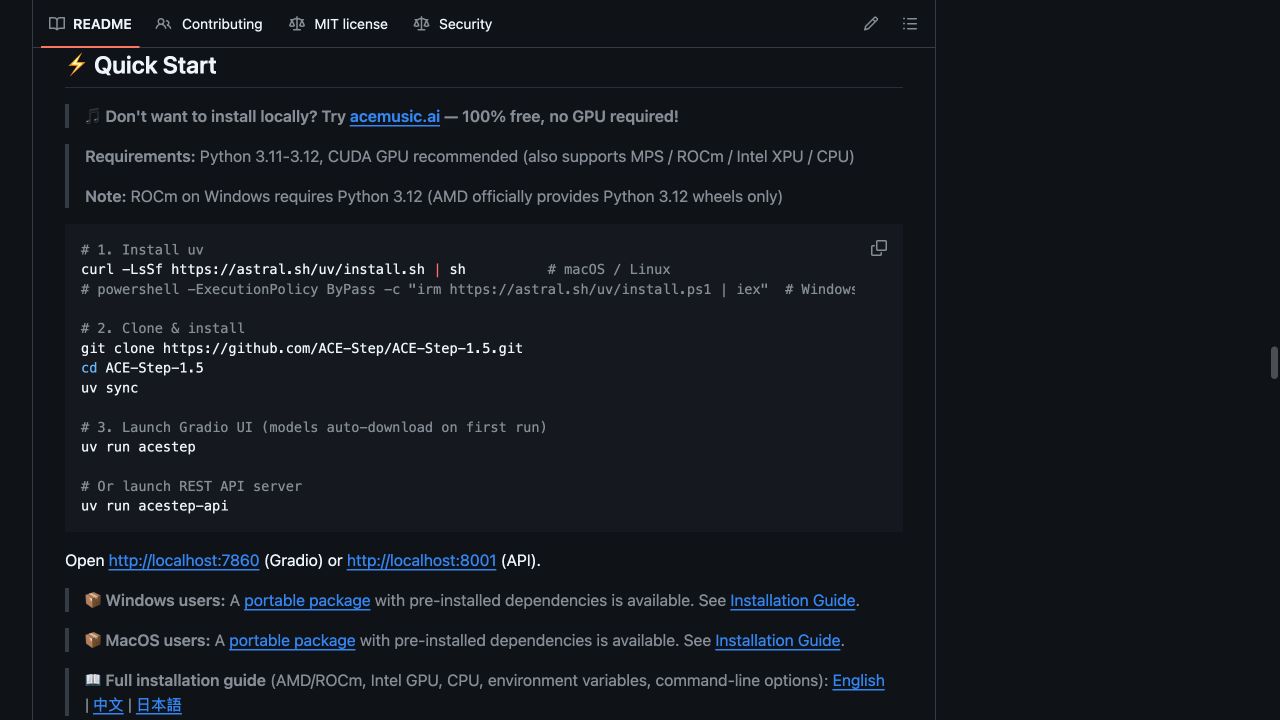
The primary distinction between ACE-Step 1.5 and Words into Music lies in their operational models. ACE-Step 1.5 is an open model, documented in its ACE-Step GitHub repository, designed for local music generation. This means users download and run the software on their own hardware. This approach offers direct control over the model and its environment, but it requires technical setup and compatible computing resources.
In contrast, Words into Music operates as a browser-based service. All processing occurs on remote servers, and users interact with the platform through a web browser. This eliminates the need for local installation, specific hardware, or technical configuration, providing a ready-to-use environment for music creation.
For the technical creator: ACE-Step 1.5's local control
For creators with a technical background and access to compatible hardware, ACE-Step 1.5 offers a workflow centered on local execution. The model's repository indicates support for local music generation, including paths for lyrics, Gradio, and API interaction. This setup allows users to run the model directly on their machines, potentially saving settings and configurations for repeated use.
Hardware requirements for ACE-Step 1.5 depend on factors such as the chosen checkpoint, quantization, and offloading strategies. While specific universal minimums are not provided, users should anticipate needing a compatible GPU to effectively run the model. This local control can be beneficial for those who prefer to manage their own computational resources and integrate the model into custom workflows or scripts via its API. The ACE-Step MIT license allows for broad use and modification of the software itself.
ACE-Step and Words into Music at a glance
| Decision | Words into Music | ACE-Step |
|---|---|---|
| Starting point | An idea or supplied lyrics | Lyrics, settings and a configured runtime |
| Main output | A complete song with vocals and music | Model-generated music files |
| Revision | Edit lyrics before generating audio | Direct model controls depend on release |
| File access | MP3 in your private library | You manage local files or hosting |
| Cost to understand | One free song total; plans and packs | Hardware, compute and maintenance; MIT code |
| Best fit | A personal song without a production setup | Operating and configuring a music model |
For the non-technical user: Words into Music's browser workflow
Users who prioritize ease of access and a streamlined experience, without the need for software installation or hardware management, may find Words into Music a more suitable option. As a browser-based service, it requires no downloads or complex setup. Users can access the platform from any compatible web browser.
Words into Music focuses on generating complete songs from an idea or supplied lyrics. The workflow includes an editable lyric draft before audio generation, options for musical direction, and selection of song language. This approach is designed for creators who want to quickly produce full musical pieces without engaging in the underlying technical details of model operation.
Workflow and output capabilities
The output and workflow capabilities of these two tools cater to different user needs.
ACE-Step 1.5, being an open model, provides the foundation for local music generation and lyrics. Its output format and specific features beyond generation depend on how a user implements and interacts with the model locally, potentially through its Gradio interface or API. The flexibility of an open model means that its capabilities can be extended or customized by technical users, but it does not inherently provide a complete, hosted song production workflow with features like a private library or direct MP3 downloads as a service would.
Language support and global reach
Words into Music offers explicit language support for song generation in English, Spanish, German, French, and Brazilian Portuguese. This feature allows creators to produce songs in multiple languages, catering to a diverse audience or specific creative needs.
Test the language, names and pronunciation you need with the exact checkpoint you intend to run. A hosted interface and a local runtime expose different controls, even when they use related model technology.
Cost and access comparison
The cost structures for ACE-Step 1.5 and Words into Music reflect their different operational models.
ACE-Step 1.5 is an open model released under the ACE-Step MIT license. This means there is no direct software purchase cost for the model itself. However, users incur costs related to their own hardware (e.g., compatible GPU), electricity consumption for running the model, and potentially the time invested in setup and maintenance. This model is essentially "free to use" in terms of software licensing, but requires a personal investment in computing infrastructure.
Words into Music operates on a subscription and one-time pack basis. A free account allows for one song total, shared across the website, tools, and connected assistants, with no credit card required and no daily refill. This free song includes an MP3 download. For more extensive use, monthly subscription tiers are available: Starter at USD $9.99 for 30 songs, Creator at $19.99 for 65 songs, and Studio at $39.99 for 150 songs. A one-time 20-song pack is also available for $9.99, which does not require a subscription. All paid options include MP3 downloads. This model provides predictable costs based on usage volume, without the need for personal hardware investment. More details can be found on our pricing page.
Ownership and licensing considerations
Understanding the licensing and potential ownership implications is important for creators.
For ACE-Step 1.5, the software itself is distributed under the ACE-Step MIT license. This license pertains to the code of the model. However, the open code license does not guarantee copyright clearance for user inputs or outputs. Users are responsible for understanding the implications of using generated content.
Words into Music states that terms apply, and it does not promise copyright ownership for generated content. Users should review the platform's terms of service for specific details regarding content usage and rights. Neither platform provides legal advice or guarantees regarding copyright.
Suggested test scenario
Consider two distinct users: a technical creator and a gift maker.
For the Technical Creator: Imagine a creator who wants to experiment with different model parameters and generate short instrumental loops for a personal project. They have a high-end GPU and are comfortable with command-line interfaces.
- Suggested Test with ACE-Step 1.5: The creator could download the ACE-Step 1.5 model, install its dependencies, and use the API path to generate 30-second instrumental pieces based on specific text prompts. They could then modify model parameters directly, save these settings, and run multiple iterations locally to compare outputs, integrating the results into their existing audio production software. This workflow aligns with their desire for local runs and saved settings.
For the Gift Maker: A user wants to create a unique, personalized song for a friend's birthday, using specific lyrics they have written. They have no interest in installing software or managing hardware.
- Suggested Test with Words into Music: The gift maker would visit the Words into Music website, sign up, and input their custom lyrics. They would then select a musical direction (e.g., "upbeat acoustic pop") and choose English as the language. After reviewing and editing the lyric draft, they would generate the song. If the first attempt is not quite right, they could make another attempt, perhaps adjusting the musical direction. Once satisfied, they would download the MP3 to share as a gift. This workflow avoids installation and focuses on generating a complete song quickly.

When to choose ACE-Step 1.5
ACE-Step 1.5 is a strong choice for specific types of creators:
- Technical Proficiency: Users who are comfortable with command-line interfaces, software installation, and managing dependencies.
- Hardware Availability: Creators who possess a compatible GPU and sufficient computing resources to run AI models locally.
- Local Control Preference: Individuals who want direct control over the model's execution, parameters, and integration into custom workflows or scripts via an API.
- Experimentation and Customization: Those who wish to experiment with the model's internals, modify its behavior, or develop their own interfaces using Gradio or other tools.
- Privacy Concerns: Users who prefer to keep their data and generation processes entirely on their local machine, rather than relying on a cloud service.
When Words into Music is the better fit
Words into Music serves users with different priorities:
- Ease of Use: Creators who prefer a straightforward, browser-based experience without any software installation or technical setup.
- Complete Song Generation: Users whose primary goal is to generate full, ready-to-listen songs from lyrics or an idea, rather than individual audio components.
- No Hardware Investment: Individuals who do not have a powerful GPU or prefer not to invest in dedicated hardware for AI music generation.
- Multi-Language Support: Creators needing to generate songs in English, Spanish, German, French, or Brazilian Portuguese.
- Managed Workflow: Users who appreciate a hosted service that handles the computational backend, offering features like a private library, favorites, and direct MP3 downloads.
- Predictable Cost: Those who prefer a subscription model or one-time pack purchase for a set number of songs, rather than incurring hardware and electricity costs.
Key takeaways
The choice between ACE-Step 1.5 and Words into Music hinges on your technical comfort, hardware resources, and desired workflow. ACE-Step 1.5 offers an open, local solution for technical creators seeking direct model control and customization, provided they have compatible hardware. Words into Music provides a user-friendly, browser-based service for anyone wanting to generate complete songs quickly, without any installation or hardware requirements. Neither tool is a direct substitute for the other; they cater to fundamentally different user needs and operational preferences. For more information on AI music generation tools, you can explore our guide on best AI music generators.
Ready to create your own music with a browser-based workflow? Start creating your song today
Frequently asked questions
Is ACE-Step suitable for technical creators who want local control and saved settings?
Yes, ACE-Step 1.5 is an open model designed for local music generation, offering API and Gradio paths for direct control and customization. It is ideal for users with compatible GPUs.
What is the best option for users who prefer not to install software, like gift makers?
For users who do not want to install a runtime, a hosted song workflow like Words into Music provides a simpler, no-installation experience for generating music.
What is the licensing for ACE-Step 1.5?
ACE-Step 1.5 is released under an MIT license, as documented in its GitHub repository. This license applies to the model's code.
What are the hardware requirements for running ACE-Step 1.5 locally?
Hardware needs for ACE-Step 1.5 depend on factors like the specific checkpoint, quantization, and offloading settings. There is no single universal minimum requirement, but a compatible GPU is generally needed.
Does the open code license of ACE-Step guarantee copyright clearance for user inputs or outputs?
No, an open code license like MIT does not guarantee copyright clearance for user inputs or the music outputs generated using the model. Users should be aware of potential copyright implications.
Is there a difference in the underlying sound engines between ACE-Step and Words into Music?
This comparison focuses on the software/model versus service workflow, not a claim of different underlying sound engines. The core distinction is how the music generation is accessed and operated.