
When a creator has a specific musical idea, such as a hummed guitar riff, and wants to use their own recorded voice, the choice of AI music tool depends on the desired outcome. Musicfy offers tools centered around voice transformation and voice-to-instrument workflows, making it suitable for developing audio ideas directly from a vocal input. Words into Music, conversely, specializes in generating complete songs from lyrical ideas, providing a structured approach to songwriting.
Words into Music publishes this comparison and sells one of the products discussed. We reviewed official public pages on October 17, 2026. We did not run a matched listening test or paid competitor tests. Vendor demos are not our own test results.
Voice-driven ideas versus lyric-first song creation
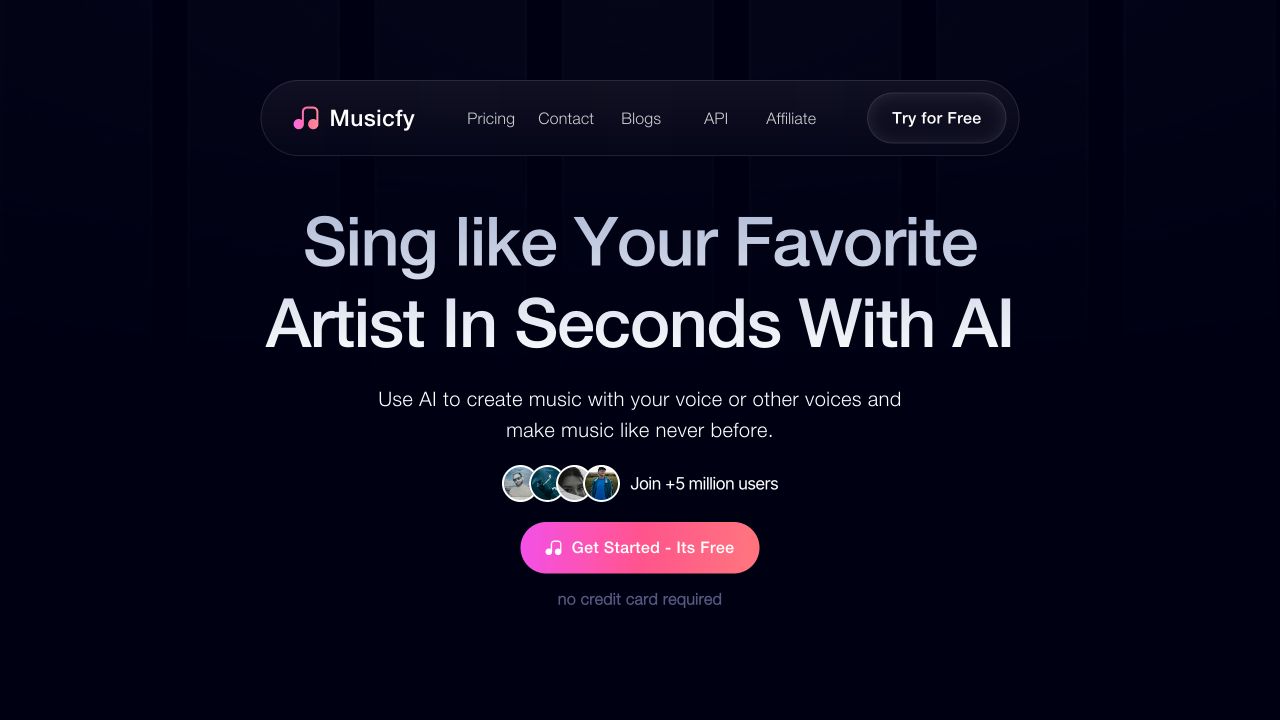
The core difference between Musicfy and Words into Music lies in their primary input and output focus. Musicfy is designed for creators who want to experiment with their voice, transform it, or use it as a basis for instrumental ideas. Its AI voice tools allow for creating models from uploaded vocals, and it supports voice-to-instrument and voice-to-voice workflows, as advertised on the Musicfy homepage. This makes it a strong contender for developing initial musical sketches or exploring vocal textures and transformations.
Words into Music, on the other hand, is built for generating complete songs starting from an idea or supplied lyrics. It allows users to draft and edit lyrics before audio generation, select musical direction, and choose a song language. The output is a full song, typically one to three minutes in length, available for playback and MP3 download. This platform is ideal for songwriters who prioritize lyrical content and require a structured, complete song output from their words.
Suggested test: from hummed idea to song
Consider a scenario where a creator hums a guitar melody and wants to develop it further, using their own voice.
Using Musicfy: The creator could record their hummed guitar idea and upload it to Musicfy. With its voice-to-instrument capabilities, Musicfy might be used to transform this vocal input into a guitar track or another instrument. Alternatively, the creator could create a voice model from their own voice and then use it to experiment with different vocal textures or styles based on their hummed melody. This approach directly addresses the transformation of a vocalized musical idea into an instrumental or altered vocal track, focusing on audio manipulation.
Using Words into Music: Words into Music does not accept audio uploads for transformation. Instead, the creator would first need to translate their hummed guitar idea into lyrical themes or specific lyrics. For example, if the hummed melody evokes a feeling of a "long road trip," the creator would write lyrics about that theme. They would then input these lyrics into Words into Music, select a musical style, and generate a complete song. The platform would produce a vocal track singing the provided lyrics, accompanied by instrumental backing, creating a full song structure. This process focuses on building a complete song around a lyrical concept inspired by the initial musical idea.
This illustrates that while Musicfy helps develop the audio idea itself through transformation, Words into Music helps build a complete song around a lyrical concept.
Musicfy's voice tools and workflows
Musicfy's emphasis on AI voice tools is a significant differentiator. Users can create a model from their uploaded vocals, enabling various voice-to-voice transformations or applications within instrumental generation. This capability requires users to have permission to use their own recorded voice and to provide clean source audio for the best results. It is important to understand that creating a voice model does not grant rights to imitate others; it is intended for personal creative use with one's own voice. The platform also advertises text-to-music features, expanding its utility beyond just voice input. Musicfy also states that "Stem Splitters Coming Soon" on its homepage, indicating this feature is not yet available.
Words into Music does not offer voice cloning, voice modeling, or audio upload capabilities. Its focus remains on generating original vocal performances based on user-provided lyrics, sung by an AI voice chosen by the platform's musical direction.
Words into Music: a lyric-first approach
Words into Music is designed for a lyric-first workflow, where users begin with an idea or existing lyrics and guide the AI to create a complete song. Key features include:
- Browser-based: The platform is accessible directly through a web browser, requiring no software installation.
- Lyric draft editing: Users can refine their lyrics within the platform before generating audio, ensuring the final song reflects their exact words.
- Musical direction: Options are available to influence the genre, mood, and tempo of the song, allowing for creative control over the musical arrangement.
- Language support: Songs can be generated in five languages: English, Spanish, German, French, and Brazilian Portuguese.
- Song length: Generated recordings are typically one to three minutes long, providing complete song structures.
- Private library and downloads: Generated songs are stored in a private library, can be marked as favorites, played back, and downloaded as MP3s. The one free song also includes MP3 download.
This structured approach is beneficial for songwriters who want to focus on lyrical storytelling and require a complete, ready-to-share song. Words into Music does not offer MIDI export, stem separation, or integration with digital audio workstations (DAWs). It is not designed for existing audio upload, section replacement, or exact melody preservation. You can learn more about turning lyrics into songs in our guide how to turn lyrics into a song.
Pricing and account features
Understanding the pricing structures is important for long-term use and planning.
Words into Music:
- Free account: Allows for one song total, shared across the website, tools, and connected assistants. No credit card is required, and the song can be downloaded as an MP3. This is a good way to test the core functionality.
- Monthly Starter: USD $9.99 for 30 songs per month.
- Creator: USD $19.99 for 65 songs per month.
- Studio: USD $39.99 for 150 songs per month.
- One-time pack: A 20-song pack is available for USD $9.99, with no subscription required. All paid plans include MP3 downloads.
Musicfy: Musicfy's precise free limits, output export options, and selected model behavior require account confirmation. Users interested in specific usage details should consult Musicfy's official pricing page directly after creating an account.
Core functionality comparison
| Decision | Words into Music | Musicfy |
|---|---|---|
| Starting point | An idea or supplied lyrics | Voice recording or selected text/audio tool |
| Main output | A complete song with vocals and music | Converted voices and musical ideas |
| Revision | Edit lyrics before generating audio | Voice and voice-to-instrument workflows |
| File access | MP3 in your private library | Confirm exports on your selected tier |
| Cost to understand | One free song total; plans and packs | Published plans; verify the actual tool allowance |
| Best fit | A personal song without a production setup | Developing a vocal or hummed idea |
Choosing the right tool for your project
Musicfy and Words into Music serve different segments of the music creation process. Musicfy excels at the initial ideation and transformation stage, particularly when voice is the primary input for generating or altering sounds. It is about taking an existing audio idea and evolving it through AI voice tools, making it ideal for vocal experimentation, creating unique voice models, or transforming hummed melodies into instrumental tracks. For creators who frequently work with their own recorded voice as a direct input for musical development, Musicfy provides a focused solution.
Words into Music, conversely, is for the composition and production of complete songs from a lyrical foundation. It provides the structure, instrumentation, and vocals for a full track, but it does not offer audio manipulation or voice modeling. One tool helps you develop a sound; the other helps you write and produce a song around words. They can complement each other in a broader creative workflow, but they are not interchangeable for their core functions. For more on AI music generators, see our guide best AI music generators.

Considering Words into Music for your workflow
If you are considering Words into Music, understand that you are shifting to a different creative workflow compared to Musicfy. Words into Music is not designed to be a direct substitute for Musicfy's voice manipulation features; it offers a distinct path for creating original, lyric-driven music.
Here is a checklist for transitioning:
- Lyric focus: Be prepared to start with lyrics or a strong lyrical concept. Words into Music does not accept audio inputs for transformation.
- No voice model migration: Your voice models or transformed audio from Musicfy cannot be transferred or used within Words into Music.
- New creative process: Embrace the process of guiding an AI to compose a full song around your words, rather than transforming existing audio.
- Language selection: If you write in one of the five supported languages, Words into Music can generate songs in that language.
- Complete song output: Expect a finished song with vocals and instrumentation, ready for download as an MP3.
Ready to turn your lyrical ideas into complete songs? Visit Make a song to begin.
Frequently asked questions
How does Words into Music differ from Musicfy's approach to song creation?
Musicfy focuses on AI voice tools, voice-to-voice, and voice-to-instrument workflows for generating ideas. Words into Music is designed to help creators develop original, lyric-led songs from scratch, emphasizing lyrical and structural development.
If I have a guitar idea I've hummed, how can Words into Music help compared to Musicfy?
Musicfy offers voice-to-instrument workflows to generate ideas from your hummed melodies. Words into Music would focus on helping you develop lyrics and structure around that guitar idea to build a complete, original song.
What are the requirements for using my own voice with AI tools like Musicfy?
When using your own recorded voice to create an AI model, as advertised by Musicfy, it is important to ensure you have full consent for its use. Clean source audio is also a practical requirement for best results and accurate model creation.
Does Musicfy currently offer stem splitting features?
According to their homepage, Musicfy has 'Stem Splitters Coming Soon.' This indicates the feature is not yet released and available for use by their users.
Where can I find precise details on Musicfy's free limits or output export options?
Precise details regarding Musicfy's free limits, output export capabilities, and selected model behavior require account confirmation on their platform. You would need to check their pricing or user dashboard for specifics.
Does creating an AI voice model grant rights to imitate other artists?
No, creating an AI voice model, even from your own voice, does not inherently grant you rights to imitate or clone other artists without their explicit consent and proper licensing. Always respect intellectual property and copyright laws.