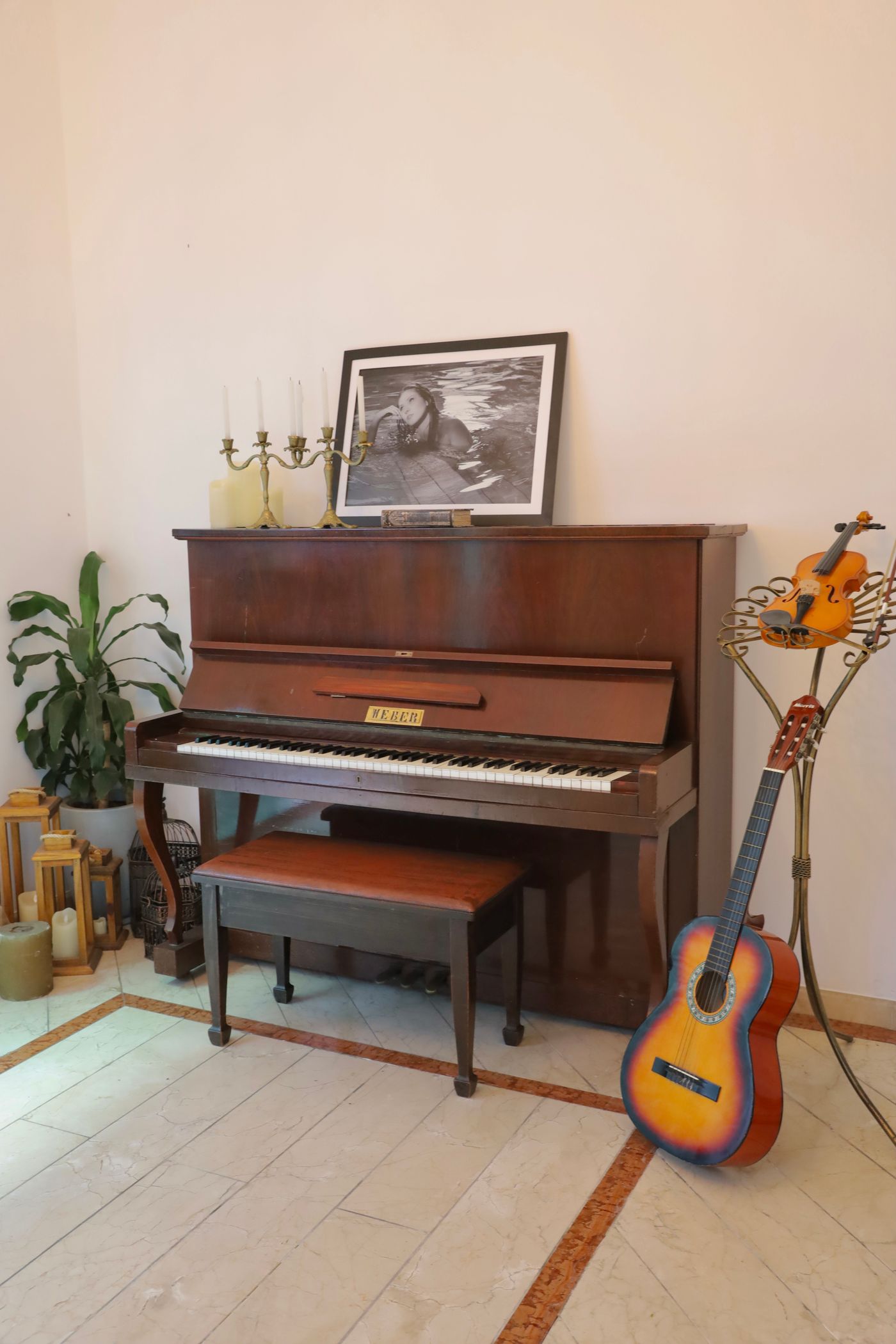
Remove the percussion role from the arrangement rather than only naming a drum kit you do not want. Guitar picking, piano patterns and bass movement can carry a pulse on their own. These ten prompts avoid drums while giving the song a clear rhythmic alternative.
Prompts to copy and adapt
These are original directions to try, not recordings or verified performance results. Copy the sound description, then add your own story or lyrics. Use this idea carries the full selected brief into our main composer for review after sign-in.
Guitar keeps time
Acoustic folk, 86 BPM. Repeating fingerpicked guitar pattern, soft bass and a close clear lead vocal. No drum kit, shaker, claps, snaps or other percussion. Let the guitar carry the pulse and resolve after the last line. Leave a short breath after each complete lyric phrase, and put instrumental replies in those gaps. Keep the lead clear when the accompaniment fills out; let the bass support the harmony without following every vocal note.
Piano footsteps
Piano pop, 92 BPM. Repeating left-hand piano pattern under warm chords and a restrained lead vocal. A quiet cello answers between phrases. No drums or percussion; make the chorus lift through melody and harmony. Leave a short breath after each complete lyric phrase, and put instrumental replies in those gaps. Keep the lead clear when the accompaniment fills out; let the bass support the harmony without following every vocal note.
Unhurried chamber
Instrumental only. Chamber-acoustic music, 74 BPM. Piano, low cello and gently plucked guitar exchange short melodic phrases. No drums, percussion, vocals or humming. Keep the movement in the piano pattern and end on a settled chord. Give the main motif a clear foreground position, with answering phrases in the spaces between its statements. Keep the lower register uncluttered, and let changes in accompaniment mark the sections without adding a competing lead melody.
Strummed conversation
Acoustic pop, 102 BPM. Steady muted guitar strums, melodic bass and clear conversational singing. A single harmony joins the chorus. No kick, snare, cymbals, handclaps, shaker or other percussion. Leave a short breath after each complete lyric phrase, and put instrumental replies in those gaps. Keep the lead clear when the accompaniment fills out; let the bass support the harmony without following every vocal note.
Long-note letter
Acoustic ballad, 68 BPM. Soft sustained piano chords and sparse guitar notes behind an intimate lead vocal. No drums or percussion. Leave pauses between lines and finish the last lyric before the final chord fades naturally. Leave a short breath after each complete lyric phrase, and put instrumental replies in those gaps. Keep the lead clear when the accompaniment fills out; let the bass support the harmony without following every vocal note.
Wooden-string motion
Instrumental only. Acoustic music, 96 BPM. Picked guitar, light mandolin and warm bass. Keep the rhythmic movement in the string patterns. No drum kit, percussion, voices, choir or sampled speech. Close with the opening motif. Give the main motif a clear foreground position, with answering phrases in the spaces between its statements. Keep the lower register uncluttered, and let changes in accompaniment mark the sections without adding a competing lead melody.
Guitar keeps time: Answering phrases
Acoustic folk, 86 BPM. Repeating fingerpicked guitar pattern, soft bass and a close clear lead vocal. Build the arrangement around a question-and-answer pattern. State one short lead phrase, leave space for an instrumental reply, then repeat the exchange with a different ending. Let the middle section thin to the main accompaniment before the full texture returns. Keep the final answer shorter than the earlier ones and resolve it clearly. Use no drums, percussion or beatboxing; let the existing instruments carry the pulse.
Unhurried chamber: A different harmony
Instrumental only. Chamber-acoustic music, 74 BPM. Piano, low cello and gently plucked guitar exchange short melodic phrases. Keep the main phrase recognizable through three passes. Start with a narrow accompaniment, change the chord underneath the phrase on its second appearance, then return to the first harmony with a small answering line above it. Keep the underlying pulse steady through the changes. Finish by removing that answering line, leaving the original phrase exposed. Use no drums, percussion or beatboxing; let the existing instruments carry the pulse.
Piano footsteps: Interlocking parts
Piano pop, 92 BPM. Repeating left-hand piano pattern under warm chords and a restrained lead vocal. Use an interlocking arrangement: let the accompaniment occupy the gaps in the lead rather than double it. Make the first section deliberately sparse and the second more connected, with sustained notes joining the short phrases. Bring the opening texture back before the final section. Keep the last statement intimate and end on a settled chord. Use no drums, percussion or beatboxing; let the existing instruments carry the pulse.
Strummed conversation: A second idea
Acoustic pop, 102 BPM. Steady muted guitar strums, melodic bass and clear conversational singing. Introduce a second melodic idea only in the middle section, using the same instruments and dynamic range as the opening. Let it answer the first idea rather than replace the overall sound. Bring back the original theme for the close, with a quieter accompaniment and a shortened final phrase. Leave the last note enough room to decay naturally. Use no drums, percussion or beatboxing; let the existing instruments carry the pulse.
Keep the words and sound separate
In Words into Music, put the words you want sung in the lyrics field and describe instruments and delivery in the sound direction. The music prompt generator helps you prepare that direction before making a song.
For Suno, Custom mode keeps your lyrics separate from the style request. Use the same sound description as a starting point, then adjust it for each tool.
Name what keeps the movement
A repeating guitar figure or a piano pattern can give a song motion without a snare or kick. Explain that role in the sound brief, then keep the instrument list small. If you request a dance beat elsewhere in the prompt, the instructions will compete.
Check the whole percussion family
A shaker, handclap, finger snap or brushed snare is still percussion. If you want none, say so explicitly and avoid those sounds in other fields. If only the drum kit is unwanted, state that distinction so a small hand-percussion part remains an option.
Common mistakes and useful revisions
| What to listen for | What to change in the prompt |
|---|---|
| The prompt removes drums but asks for claps | Decide whether you want no drum kit or no percussion at all, then make the instrument list agree. |
| The song loses its pulse | Assign a repeating rhythmic pattern to guitar or piano rather than adding percussion back indirectly. |
Frequently asked questions
Does no drums mean no rhythm?
No. Chord changes, picking patterns and repeated bass notes can all create movement. These prompts give that role to pitched instruments.
Will the recording always exclude percussion?
No prompt is an exact production control. Listen for unwanted percussion and revise any conflicting instrument or rhythm directions.
How can I give a song energy without drums?
Ask for rhythmic guitar strumming, repeated piano chords or a moving bass line. Specify no percussion if you also want to leave out claps, shakers and similar sounds.